
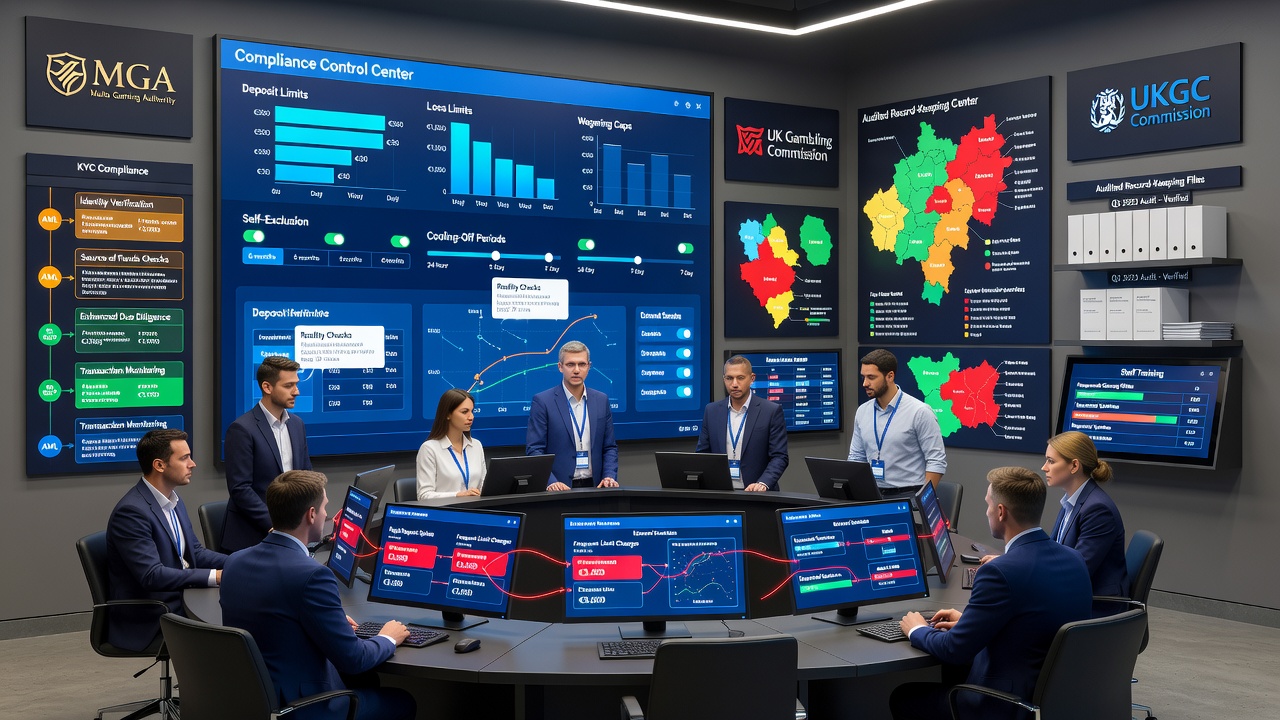
Licensing an online gambling business is only the starting point. Regulators increasingly judge operators by how well they protect players once accounts are live - through monitoring, intervention, and clear limits on harm. Responsible gaming has moved from a side policy to a core operational discipline, sitting alongside anti-money laundering (AML) and Know Your Customer (KYC) controls as a condition of staying licensed.
Player Protection as an Operational System
Responsible gaming tools exist to give players visibility and control over their own activity. Deposit limits, loss limits, wagering caps, self-exclusion, cooling-off periods, and reality checks are now standard features across regulated markets, though the specific thresholds and mandatory offerings differ by licence. The Malta Gaming Authority, for instance, sets its own player protection requirements for licensees, and other regulators apply their own frameworks. The common thread is that these tools only work if operators monitor whether players actually use them - and act when behavior suggests a tool isn't enough.
Player monitoring is the connective layer. Rapid increases in deposits, frequent limit changes, attempts to reverse withdrawals, or unusually long sessions are not proof of a gambling problem on their own, but taken together they form a risk pattern that compliance teams are expected to recognize. The UK Gambling Commission's guidance for remote licensees explicitly requires operators to use such indicators to identify customers who may be experiencing harm and to intervene accordingly.
Where AML and KYC Fit In
AML and KYC procedures run in parallel to player protection, addressing different but overlapping risks. KYC verifies who a player is - identity, age, eligibility - while AML focuses on where the money comes from and whether transaction patterns suggest financial crime. Risk assessments, transaction monitoring, enhanced due diligence, and record keeping form the backbone of AML programs, and Source of Funds or Source of Wealth checks are applied when a player's financial profile doesn't match their gambling activity.
These systems share data. A player triggering AML scrutiny for unusual deposit patterns may also be flagged under responsible gaming monitoring for escalating wagering behavior. Treating these as separate silos, rather than connected signals, is one of the more common compliance weaknesses operators encounter.
Jurisdictional Complexity
Operators active in several markets cannot apply a single policy everywhere. Requirements for intervention thresholds, mandatory limits, and reporting obligations vary by regulator, which means compliance teams need to map rules market by market while keeping core AML and KYC frameworks consistent. Local expertise often proves necessary to interpret requirements correctly, particularly as regulatory guidance is updated.
- Deposit, loss, and wagering limits with jurisdiction-specific defaults
- Behavioral monitoring tied to documented escalation procedures
- Risk-based KYC and AML checks, including enhanced due diligence
- Source of Funds reviews for higher-risk players
- Regular staff training and audited record keeping
Where Compliance Breaks Down
Formal policies do not guarantee effective protection. Operators sometimes apply identical checks to every player instead of using a risk-based approach, rely on procedures that haven't kept pace with regulatory updates, or offer protection tools without tracking whether they reduce harm. Undocumented interventions and inconsistent staff training compound these gaps, turning what should be a continuous process into a box-ticking exercise performed only at licensing stage.
A functioning compliance framework treats responsible gaming, AML, and KYC as interdependent systems that require ongoing review, not fixed policies set once and left unchanged. As regulatory scrutiny of player protection intensifies across markets, the operators best placed to adapt are those already running monitoring, documentation, and training as routine operations rather than periodic compliance exercises.