
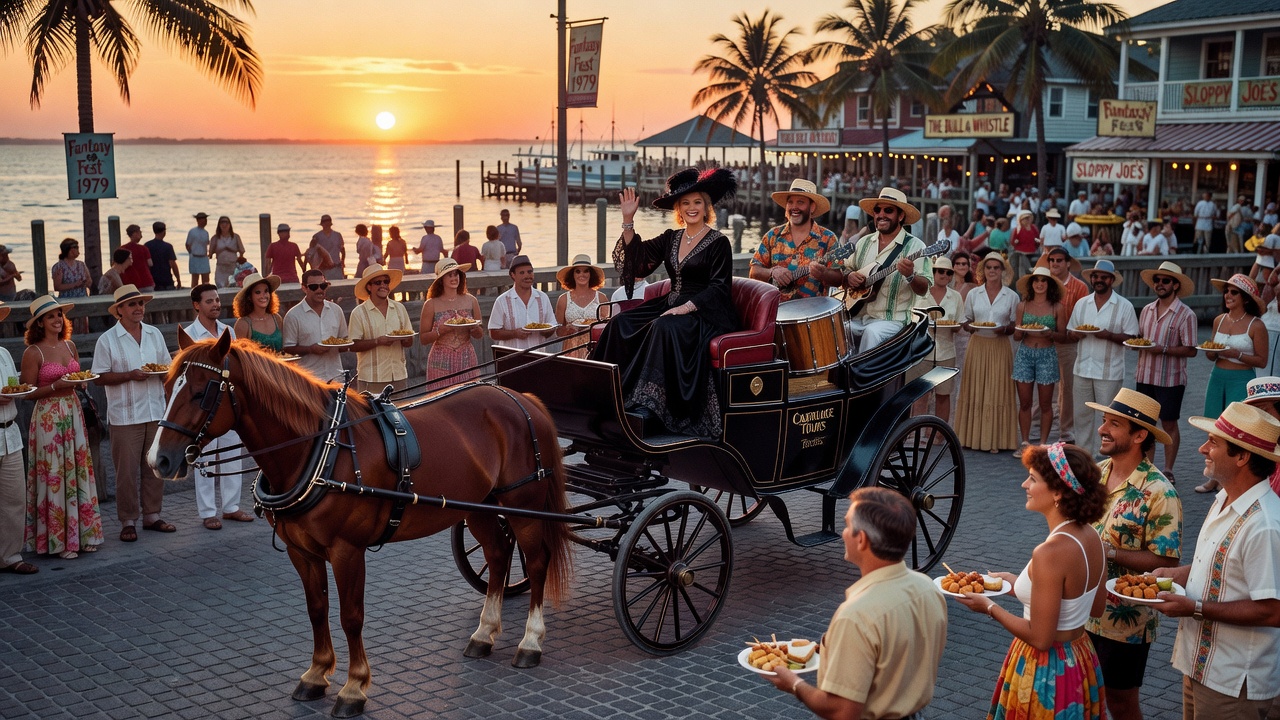
A Florida Keys newspaper's search for an authentic image of the first Fantasy Fest has turned into a small lesson in how local history survives - or nearly doesn't. The Keys Weekly is preparing a column on the inaugural 1979 festival and has been unable to locate a verified photograph from the original three-day event, relying instead on institutional archives and public appeals to fill the gap.
What Happened in Key West in October 1979
The First Annual Old Key West Fantasy Fest opened on Friday, October 26, 1979, as a three-day celebration designed to extend the island's tourist season into the shoulder months of autumn. Mary Ellen Toppino, billed as the Grand Mistress of Madness, arrived at Mallory Square in a black horse-drawn carriage as calypso music played at sunset. Restaurants and clubs served island food, and the event drew on Key West's established identity as a destination built around food, music, and public spectacle. What began as a modest, locally organized gathering would, over subsequent decades, grow into one of the most recognized annual festivals in Florida, though the earliest editions left behind comparatively little visual documentation.
Why the Record Is Thin
Local history research routinely runs into this problem: events that seem significant in hindsight were often undocumented in real time because no one anticipated their later importance. In 1979, photography was expensive, film had to be processed, and local newspapers had limited space and budgets for feature coverage of a brand-new, untested event. The image the columnist found - a horse and buggy operated by Carriage Tours on Whitehead Street, referenced in a Miami Herald article from December 20, 1979, and preserved in the Wright Langley Collection at the Florida Keys History Center - is a plausible stand-in for what Toppino's carriage may have looked like, but it is not confirmed documentation of the actual event.
The Value of Institutional Archives
This is where public libraries and historical collections earn their keep. The Florida Keys History Center, housed within the Monroe County Public Library system, functions as a repository for exactly this kind of material: newspaper clippings, photographs, and ephemera that might otherwise be discarded once their original purpose - reporting a routine local business story - has passed. The Wright Langley Collection, named for a Key West historian and photographer, is one of several resources researchers and journalists use to reconstruct local narratives when personal or institutional memory has faded.
- Local newspapers often hold the only surviving images of community events from before the digital era.
- Historical societies and public library archives are frequently underused by the public despite being open resources.
- Crowdsourcing - asking readers directly for old photographs - remains one of the more reliable ways to surface material that was never formally archived.
A Common Challenge for Local Journalism
The columnist's public request for reader-submitted photographs reflects a practice many community newspapers depend on, particularly when covering anniversaries or retrospectives of events that predate widespread personal photography. It also underscores a broader point about regional journalism: the accuracy of a historical account often depends less on grand archives than on individual residents who happened to keep a shoebox of old prints. As Fantasy Fest approaches its next anniversary, the search for a single verified 1979 photograph is a reminder that even well-known cultural institutions can have origin stories that are only partially documented.