
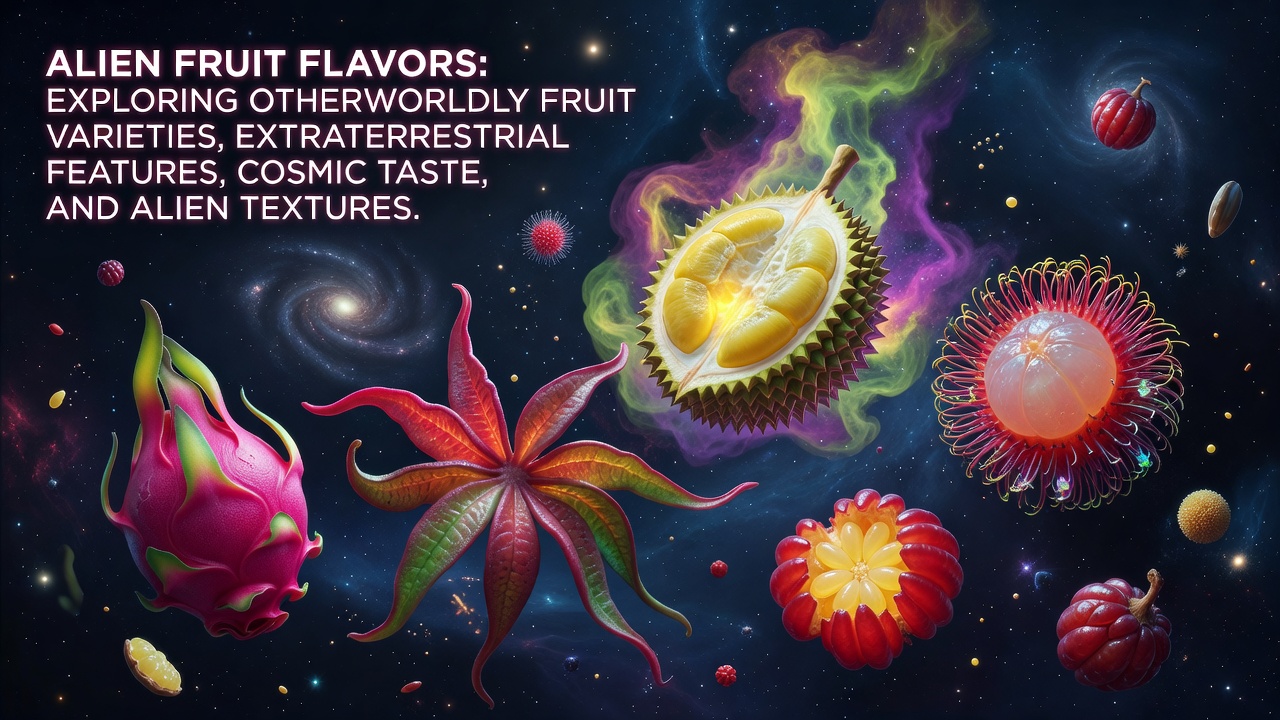
No fruit found on Earth tastes like durian smells, looks like a dragon's scales, or feels like biting into a cloud of static electricity - yet each of these descriptions applies to real produce grown somewhere on this planet. That gap between expectation and reality is exactly why the concept of alien fruit flavors has taken hold in food culture, design, and even gaming aesthetics. Fruit that seems to have fallen from another galaxy isn't science fiction; it's a category of sensory experience built on genuine biological oddities.
This exploration treats "alien" as a lens rather than a genre. The fruits discussed here are terrestrial, but their colors, shapes, and flavor profiles push against what most palates consider normal. Some of these same visual cues - glowing skins, jagged textures, impossible color gradients - have found their way into digital entertainment too. A striking example shows up in the alien fruits features of a themed slot game, where designers translated the idea of cosmic produce into visual iconography built for tension and reward. That crossover says something about how deeply the "alien fruit" idea resonates outside the kitchen.
What follows is a structured look at otherworldly fruit varieties, the physical traits that earn them the extraterrestrial label, the taste sensations that defy easy comparison, and the textures that make eating them a small adventure. The goal is not novelty for its own sake, but a clearer understanding of why certain fruits register as strange, and what that strangeness reveals about biology, agriculture, and perception itself.
What Makes a Fruit Seem "Alien"?
Visual Cues That Trigger the Alien Association
Color is the fastest signal. Human perception expects fruit to fall within a narrow band of reds, yellows, oranges, and greens because that's what evolution trained primates to associate with ripeness and safety. When a fruit appears electric blue, deep purple-black, or translucent, the brain flags it as unfamiliar before any bite is taken. Shape matters just as much - spiky exteriors, asymmetrical lobes, or skins that resemble reptilian scales all contribute to the sense that something didn't originate from a conventional orchard.
Biological Reasons Behind Unusual Appearances
These extraterrestrial fruit features are not random. Pigmentation often comes from anthocyanins or unusual carotenoid concentrations that serve real evolutionary purposes: attracting specific pollinators, deterring certain pests, or signaling ripeness to animals with different color vision than humans. Spiky rinds frequently evolved as defense mechanisms against browsing animals. Understanding the mechanism behind the appearance strips away some of the mystique, but it also deepens appreciation - this is adaptation, not accident.
Cultural Framing and the "Alien" Label
Much of what gets called alien fruit flavors is really a matter of unfamiliarity within a given food culture. A fruit considered exotic in one region may be a staple snack in another. The label says more about the observer's culinary background than the fruit's inherent strangeness, though some varieties genuinely push sensory boundaries regardless of where you grew up.
Otherworldly Fruit Varieties Worth Knowing
Dragon Fruit and Its Reptilian Aesthetic
Dragon fruit, or pitaya, earns its name honestly. The bright pink or yellow skin, covered in curling green-tipped scales, looks more like something harvested from a fantasy illustration than a cactus flower. Inside, the flesh is mild, faintly sweet, speckled with tiny black seeds that add a gentle crunch. It's an entry point for anyone curious about otherworldly fruit varieties without committing to anything too challenging on the palate.
Buddha's Hand and Its Impossible Shape
This citrus variety looks like fingers reaching outward from a central palm, with almost no pulp inside - just fragrant, thick pith and rind. It's used almost entirely for its zest and aroma rather than eaten directly, which itself is unusual. The shape alone justifies its place among the strangest produce grown commercially.
Rambutan, Ackee, and Lesser-Known Regional Oddities
Rambutan's soft red spines give it a sea-urchin appearance, while ackee - toxic when unripe, safe and buttery when mature - carries genuine risk that adds a layer of danger to its strangeness. These fruits rarely appear in mainstream grocery chains outside their native regions, which keeps them firmly in the "otherworldly" category for most global consumers.
- Dragon fruit - scaled exterior, mild sweetness, seed-flecked interior
- Buddha's hand - finger-like citrus with intense fragrance, minimal pulp
- Rambutan - spiny red shell, translucent sweet-tart flesh
- Ackee - buttery texture when ripe, toxic if harvested too early
Extraterrestrial Fruit Features Under the Microscope
Skin Structures: Spikes, Scales, and Membranes
Rind design varies dramatically across species. Some fruits protect themselves with hard, segmented shells; others rely on soft spines or waxy coatings. Each structure reflects a different survival strategy - moisture retention in arid climates, physical defense against foragers, or camouflage among foliage.
Internal Architecture: Seeds, Membranes, and Chambers
Cut open a passionfruit and you'll find a jelly-like mass of seeds suspended in translucent pulp, an internal layout that looks almost architectural. Pomegranates organize hundreds of seed-sacs into geometric chambers separated by bitter white membrane. These internal patterns are among the clearest extraterrestrial fruit features because they're invisible until the fruit is opened, creating a small reveal each time.
Color Anomalies and Pigment Chemistry
Certain fruits shift color depending on ripeness, soil chemistry, or even light exposure during growth. Black sapote, sometimes called "chocolate pudding fruit," turns from green to a dark, custard-like brown that looks nothing like typical ripening. These pigment shifts are chemically explainable but visually startling.
Cosmic Fruit Taste: Flavor Profiles That Defy Easy Comparison
Flavors With No Direct Earth Analog
Some fruits resist comparison entirely. Miracle fruit doesn't taste unusual on its own, but it temporarily rewires the tongue's sour receptors, making lemons taste like candy for roughly half an hour. That's not a flavor exactly - it's a manipulation of flavor perception itself, which is arguably even stranger.
Layered and Contradictory Taste Sensations
Durian is the definitive example of cosmic fruit taste: an odor so pungent it's banned on public transit in parts of Southeast Asia, paired with a custard-rich flavor that fans describe as one of the best things they've ever eaten. The contradiction between smell and taste is the entire appeal for devoted eaters, and the entire barrier for everyone else.
How Sourness, Bitterness, and Sweetness Combine Unusually
Many strange-tasting fruits pack multiple competing flavor notes into a single bite. Tamarind delivers sour, sweet, and faintly caramel-like notes simultaneously. Bitter melon front-loads intense bitterness that some palates eventually reinterpret as refreshing after repeated exposure. These combinations don't resolve into a single clean flavor, which is precisely what makes them memorable.
Alien Fruit Texture: The Sensory Experience of Eating the Unfamiliar
Crunch, Snap, and Unexpected Resistance
Texture often surprises people more than flavor does. Jicama offers a crisp, water-chestnut-like snap despite looking like an unassuming brown root. Star fruit provides a firm, almost crystalline bite that shatters slightly with each chew, closer to biting into a very juicy apple than anything tropical fruit lovers might expect.
Slime, Jelly, and Membrane Sensations
Passionfruit pulp, aloe vera gel, and the interior of a fresh lychee all deliver textures closer to jelly or membrane than solid fruit flesh. This alien fruit texture category tends to divide people sharply - some find it delightfully cooling, others find it unsettling on first contact.
Powdery, Custardy, and Paste-Like Consistencies
Cherimoya and black sapote both deliver a custard consistency that feels closer to dessert than raw produce. Bananas, by contrast, become starchy and dense when unripe, then shift into a soft paste-like texture as they mature - a transformation most people never consciously notice despite eating the fruit constantly.
Where Alien Fruit Aesthetics Show Up Beyond the Kitchen
Design and Branding Inspired by Cosmic Fruit
Illustrators, packaging designers, and game artists borrow heavily from the visual language of strange produce because it communicates novelty instantly. Bright, saturated colors combined with jagged or bioluminescent-looking details signal "unusual" faster than almost any other visual shorthand available to designers.
Alien Fruit Themes in Entertainment and Gaming
Slot games and digital entertainment frequently lean on fruit iconography updated with a science-fiction twist, turning familiar symbols into something that feels fresh while staying instantly recognizable. It's a practical design choice: players already understand fruit symbols from decades of gaming history, so adding an alien layer creates novelty without sacrificing clarity.
Frequently Asked Questions
Is durian actually dangerous to eat, or just unpleasant to smell?
Durian is safe to eat for most healthy adults. The strong odor is a separate issue from safety - it's simply a sulfur-compound-heavy scent profile that many people find overwhelming, though it has no bearing on toxicity.
Why do some strange fruits taste completely different depending on ripeness?
Ripening triggers chemical changes - starches converting to sugars, tannins breaking down, pigments shifting - that can alter flavor dramatically. Ackee is the clearest example, since it's genuinely toxic unripe and safe once properly matured.
Are brightly colored fruits more likely to be unusual in flavor?
Not necessarily. Color and flavor develop through separate biological pathways, so a vividly colored fruit can taste quite mild, and a plain-looking one can carry an intense flavor. Color is a better predictor of visual novelty than of taste intensity.
What causes the jelly-like texture in fruits like passionfruit?
That texture comes from a combination of pectin, water content, and the way seeds are suspended within the pulp. It's a structural adaptation that helps protect seeds while keeping them easy for animals to swallow and disperse.
Why do designers use fruit imagery with an alien or cosmic twist so often?
Fruit symbols are already familiar from decades of visual culture, food packaging, and gaming, so adding unusual colors or textures creates instant novelty without confusing the viewer about what they're looking at.
Can taste perception really be altered by eating certain fruits?
Yes. Miracle fruit contains a protein called miraculin that binds to taste buds and temporarily makes sour foods taste sweet. The effect is well documented and typically lasts around thirty minutes to an hour.