
Ninety percent of new traders quit within the first year, and the primary reason has nothing to do with market conditions. It has to do with skipping practice. Anyone who opens a live position before understanding order types, spread costs, and platform mechanics is essentially trading blind. That's precisely why a structured demo environment matters more than most beginners assume.
A chicken road demo exists to close that gap. It replicates real market behavior - price movement, execution speed, order book depth - without putting a single dollar at risk. For readers who want a complete walkthrough of setup and safe usage before touching real funds, the chicken road demo account is a practical resource, and if you want a deeper reference, this chicken road demo account guide covers the full mechanics in detail. Understanding how the simulator handles slippage and margin calls before facing them live changes how a trader reacts under pressure.
What follows is a complete breakdown: how to register, how to configure the simulator correctly, how to interpret the practice data you generate, and how to transition from demo to live trading without repeating the mistakes that sink most newcomers. Whether the goal is forex, indices, or broader market practice, the same principles apply.
What Is a Chicken Road Demo and Why It Matters
A demo environment is not a toy version of a trading platform. It is a full-featured simulator that mirrors live market data with virtual capital substituted for real money. The chicken road trading demo specifically replicates order execution, charting tools, and account management features found in the live version, which means skills built here transfer directly.
Core Purpose of the Demo Environment
The primary function is risk-free skill development. Traders test strategies, observe how spreads widen during volatile sessions, and learn platform navigation without financial consequence. Mistakes made here cost nothing but time - a trade-off every serious trader should welcome.
How It Differs From Live Trading
Execution in a demo can feel smoother than live markets because virtual liquidity doesn't always account for real-world slippage during news events. This is a known limitation, not a flaw specific to any one platform. Traders should treat demo results as directional guidance, not a guarantee of identical live performance.
Who Benefits Most From Practicing First
Beginners obviously gain the most, but experienced traders testing new strategies or unfamiliar instruments also rely on demo accounts to validate ideas before risking capital. Anyone switching from stocks to forex, for instance, benefits from re-testing assumptions in a simulated setting.
- New traders building foundational platform knowledge
- Experienced traders testing a new strategy or indicator combination
- Anyone switching between asset classes, such as equities to currency pairs
- Traders returning after a break who need to re-familiarize themselves with tools
Setting Up Your Chicken Road Account Step by Step
Registration is straightforward, but the details matter. A rushed setup often leads to configuration errors that surface later, usually at the worst possible moment - mid-trade.
Registration Requirements and Verification
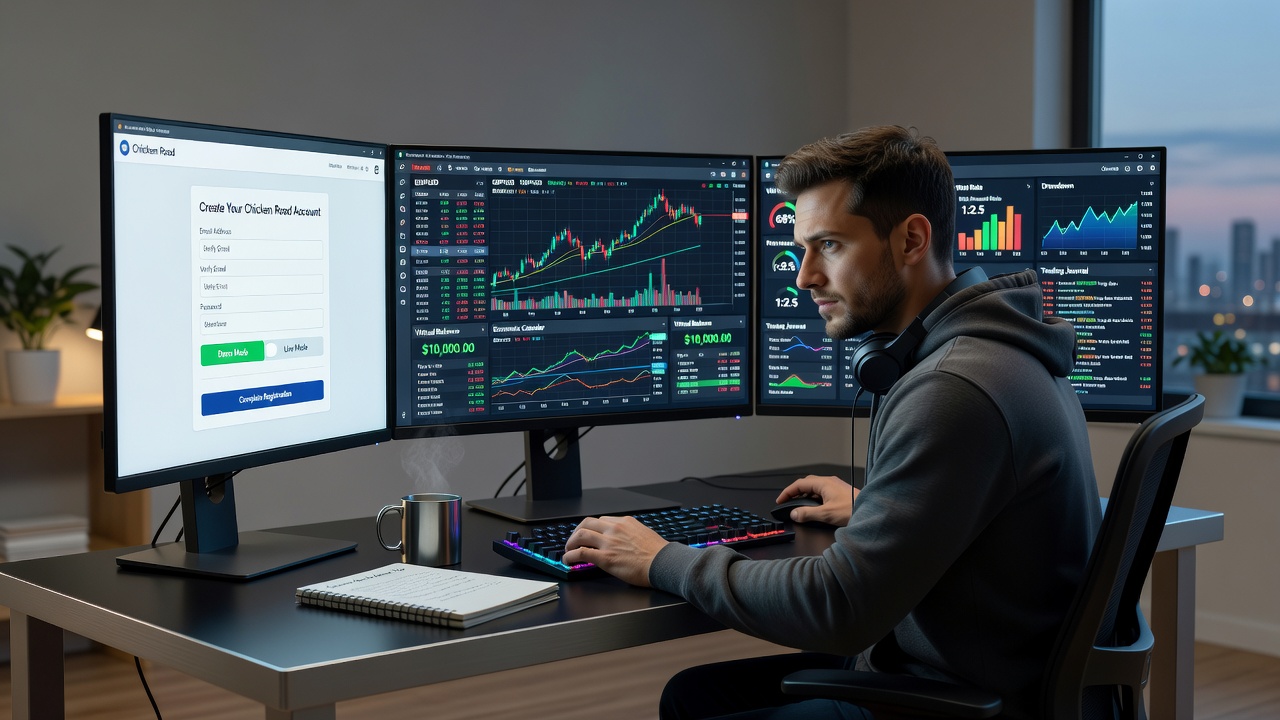
Setting up a chicken road account typically requires an email address, basic identity details, and acceptance of platform terms. Some tiers may request additional verification if you intend to later convert to a live account. Completing this step accurately from the start avoids delays down the line.
Choosing Between Demo and Live Modes
Most platforms present a clear toggle between simulated and real trading environments. Selecting the demo mode activates virtual balance allocation, usually a fixed amount of practice currency that resets or replenishes periodically. Confirm which mode is active before placing any order - this single check prevents accidental real-money trades.
Customizing Account Settings for Practice
Adjust base currency, leverage ratios, and default order sizes to match what you'd realistically use in live trading. Practicing with unrealistic leverage settings teaches habits that don't transfer well. Align your demo configuration with your actual future trading plan, not with maximum available settings just because they're accessible.
Accessing the Chicken Road Forex Demo
Forex practice requires a slightly different setup than general market simulators because currency pairs behave differently - tighter spreads, higher liquidity, and distinct volatility patterns tied to economic releases.
Forex-Specific Features Inside the Simulator
The chicken road forex demo typically includes real-time currency pair pricing, economic calendar integration, and pip-based profit/loss calculation. These features let traders study how interest rate announcements or employment data move major pairs like EUR/USD or GBP/USD without financial exposure.
Practicing With Major and Minor Currency Pairs
Start with major pairs - they offer tighter spreads and more predictable liquidity patterns. Once comfortable, move to minor and exotic pairs, which carry wider spreads and sharper volatility. This progression mirrors how professional traders build currency exposure gradually rather than jumping into thinly traded pairs immediately.
Understanding Leverage and Margin in Forex Simulation
Forex trading commonly involves higher leverage than equities, which amplifies both gains and losses. The simulator lets you test how a 50:1 or 100:1 leverage ratio affects margin requirements and liquidation thresholds - knowledge that's dangerous to learn for the first time with real capital on the line.
Configuring Your Chicken Road Simulator Account for Realistic Practice
A simulator only teaches useful lessons if it's configured to reflect real trading conditions. Default settings are rarely optimal for serious practice.
Adjusting Virtual Balance to Match Real Trading Plans
If your actual trading capital will be a modest amount, don't practice with an inflated virtual balance. A chicken road simulator account loaded with unrealistic funds encourages oversized position sizing that won't translate to your real account. Set the virtual balance to mirror your intended starting capital.
Setting Realistic Spreads and Execution Speeds
Some platforms allow manual adjustment of spread simulation to reflect broker-specific conditions. Where this option exists, use it - matching your future live broker's typical spread avoids surprises when you transition.
Tracking Performance Metrics During Simulation
Most simulators log win rate, average risk-reward ratio, and maximum drawdown automatically. Review these weekly rather than after every trade - short-term noise obscures pattern recognition, while weekly review reveals whether a strategy has genuine edge.
Using the Chicken Road Trading Demo to Test Strategies
Strategy testing is where the demo environment earns its value. This is not about proving a strategy works in theory - it's about stress-testing it against real, moving price data.
Backtesting Versus Forward Testing in the Demo
Backtesting uses historical data to check how a strategy would have performed. Forward testing, done inside the chicken road trading demo, applies the strategy to live-moving prices in real time without financial risk. Both matter, but forward testing exposes execution issues - like slippage during fast moves - that backtesting can't fully capture.
Identifying Weaknesses Before Going Live
Common weaknesses surface quickly: strategies that work in calm markets but fail during high volatility, or risk management rules that get abandoned emotionally even in a low-stakes simulated environment. If you catch yourself deviating from your plan in demo trading, that's a signal worth addressing before capital is on the line.
Building a Trading Journal From Demo Results
Log every simulated trade: entry reason, exit reason, outcome, and emotional state during the trade. This journal becomes the single most valuable document for refining a strategy, far more useful than the raw win/loss statistics alone.
- Entry and exit price with timestamp
- Reason for entering the trade
- Emotional state during the trade (calm, rushed, uncertain)
- Outcome and lesson learned
Transitioning From Demo to Live Trading
The jump from simulation to real capital introduces a variable no demo can fully replicate: genuine financial risk and the psychological weight it carries.
Signs You're Ready to Trade With Real Capital
Consistency over a meaningful stretch of time - not a single lucky week - is the clearest indicator. If your risk-reward ratio and win rate remain stable across varied market conditions in the demo, that consistency suggests genuine skill rather than favorable circumstance.
Managing the Psychological Shift From Virtual to Real Money
Real money changes decision-making. Traders who executed flawlessly in simulation often hesitate or overtrade once actual funds are at stake. Starting with a small live position size, even smaller than your demo trades, helps bridge this psychological gap gradually.
Common Mistakes When Switching Too Early
The most frequent error is mistaking demo profitability for readiness, without accounting for the emotional pressure real losses create. Another is switching platforms or brokers at the same time as switching to live trading, which introduces unfamiliar variables at the worst possible moment.
Frequently Asked Questions
Is a chicken road demo account free to use indefinitely?
Most demo accounts remain accessible without time limits, though some platforms reset virtual balances periodically or after extended inactivity. Check the specific terms during registration, since policies vary between providers.
Can I lose real money while using a chicken road forex demo?
No. The forex demo operates entirely with virtual currency, so no real funds are ever at risk. The only cost is time invested in practice.
How long should I practice before switching to a live account?
There's no fixed timeframe, but consistency across multiple market conditions - trending, ranging, and volatile - matters more than calendar time. Some traders reach readiness in a few weeks; others need several months of disciplined practice.
Does demo performance guarantee similar results in live trading?
No. Live markets introduce slippage, emotional pressure, and sometimes different execution speeds that a simulator can't fully replicate. Treat demo results as a strong indicator of skill, not a guarantee of identical live outcomes.
Can I adjust leverage settings inside a chicken road simulator account?
Yes, most simulators allow leverage customization so you can practice under conditions matching your intended live trading setup. Adjusting this correctly is one of the most important steps in realistic practice.
What's the biggest mistake traders make when using demo accounts?
Treating the virtual balance as unlimited and taking oversized, unrealistic positions. This builds habits that fail immediately once real capital and real risk enter the equation.