
Both Teams to Score, known universally as BTTS, ranks among the simplest propositions in football betting: will each side find the net at least once, regardless of who wins. No score prediction, no winner required - just a binary outcome on goals at both ends of the pitch. That simplicity explains its popularity, but it also hides judgment calls that bettors frequently overlook.
How the Market Actually Settles
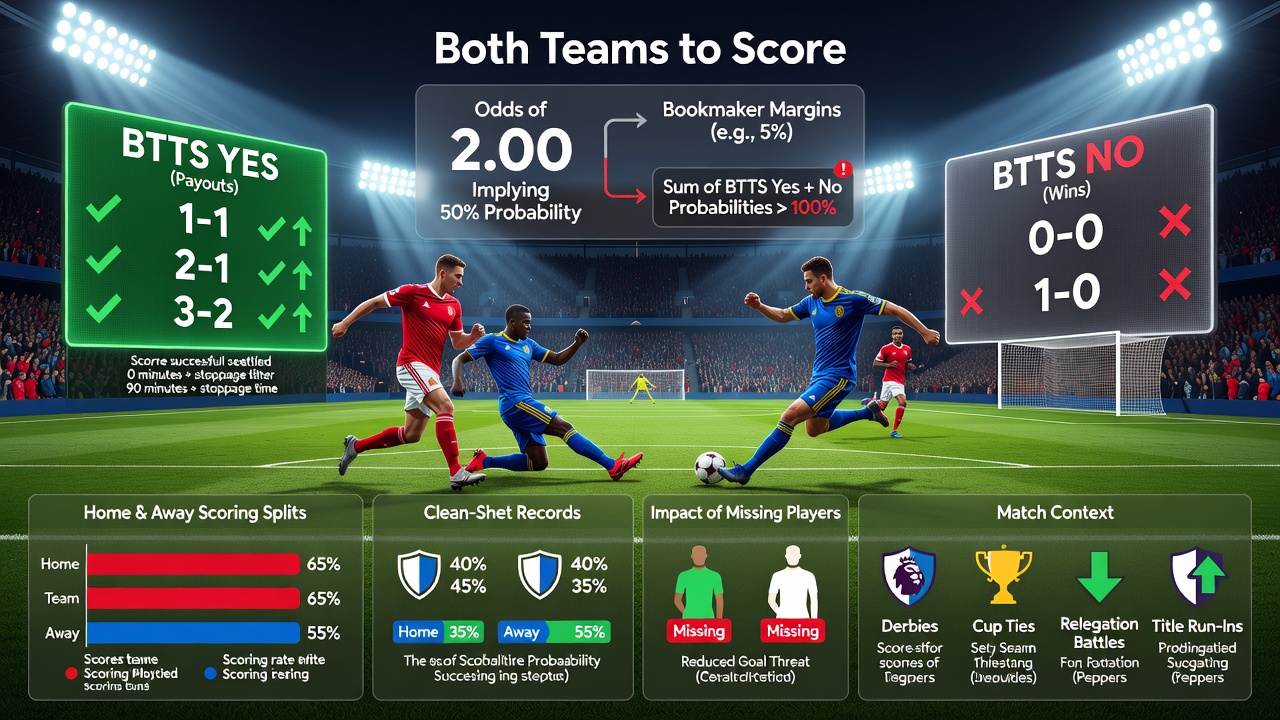
A BTTS Yes bet pays out on scorelines like 1-1, 2-1 or 3-2, where both teams register at least one goal. BTTS No wins on 0-0, 1-0, or any scoreline where one side is shut out. Settlement is based on 90 minutes plus stoppage time; extra time and penalty shootouts are typically excluded from calculation unless a bookmaker states otherwise. This distinction matters most in cup competitions, where a match heading to extra time can create confusion over whether a late equaliser still counts. Checking the specific terms before staking is not optional diligence - it's the difference between understanding what you've actually backed and assuming you know.
Reading the Odds Correctly
Every BTTS price reflects an implied probability, and recognising that is central to assessing value. Odds of 2.00 imply a 50% chance, calculated simply as 1 divided by 2.00. But that figure includes the bookmaker's built-in margin, meaning the true probability is somewhat lower than the price suggests. Add the implied probabilities of BTTS Yes and BTTS No together and the total will exceed 100% - that excess is the operator's edge, present in every market regardless of sport or selection. Bettors who skip this comparison and bet purely on gut feeling about "goals being likely" are often paying more than the outcome is worth.
Where the Analysis Should Focus
Scoring frequency and clean-sheet records offer a starting point, but context changes outcomes more than raw statistics suggest. A team that scores freely at home may struggle on the road. Missing forwards reduce goal threat; missing defenders or goalkeepers increase vulnerability. Cup finals, relegation six-pointers and congested fixture schedules can all push matches toward caution rather than openness, regardless of what season-long averages indicate.
- Home and away scoring splits, not combined season totals
- Clean-sheet frequency for both the team and its opponent
- Confirmed team news on attackers, defenders and goalkeepers
- Match context - derby, cup tie, dead rubber or title run-in
Common Mistakes and Why Caution Matters
The most frequent error is conflating "goals" with "both teams scoring." A 4-0 win is goal-heavy but loses every BTTS Yes bet. Equally, a dominant side can control a match so completely that the opponent barely threatens, making BTTS No viable even against an attacking favourite. Combination markets - BTTS paired with a match winner or goal line - offer higher odds but add conditions, and each additional requirement increases the chance of losing the whole bet. None of this amounts to a system for beating the odds; BTTS remains a probability-based market where the bookmaker's margin persists regardless of research quality. Treating statistics as supporting evidence rather than certainty, setting a stake appropriate to a personal budget, and verifying settlement rules before confirming a bet are the practical safeguards that separate informed participation from guesswork.